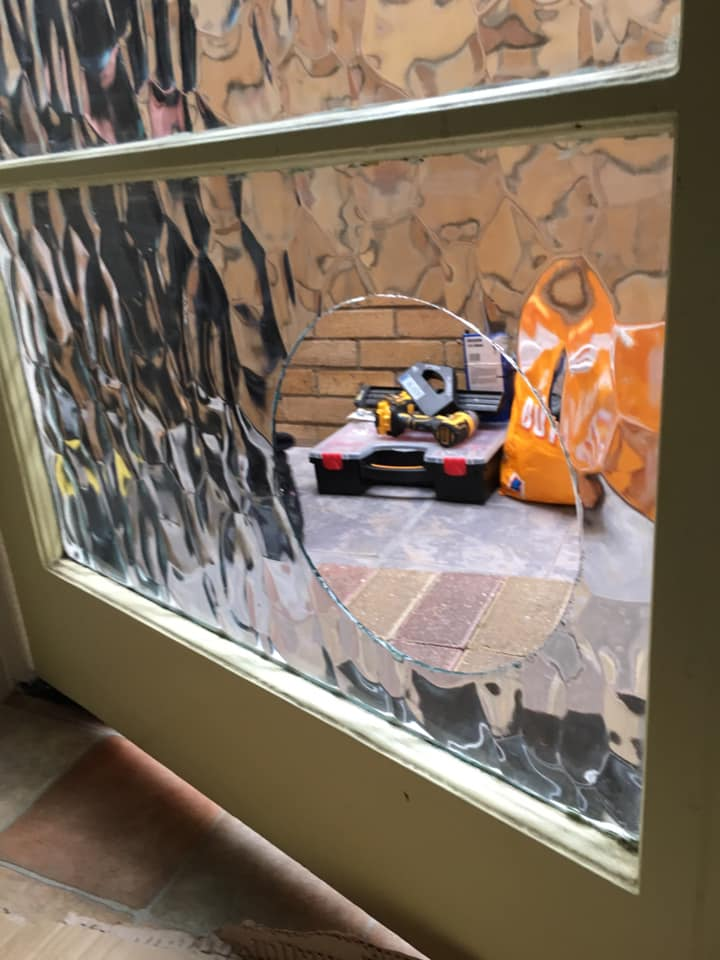
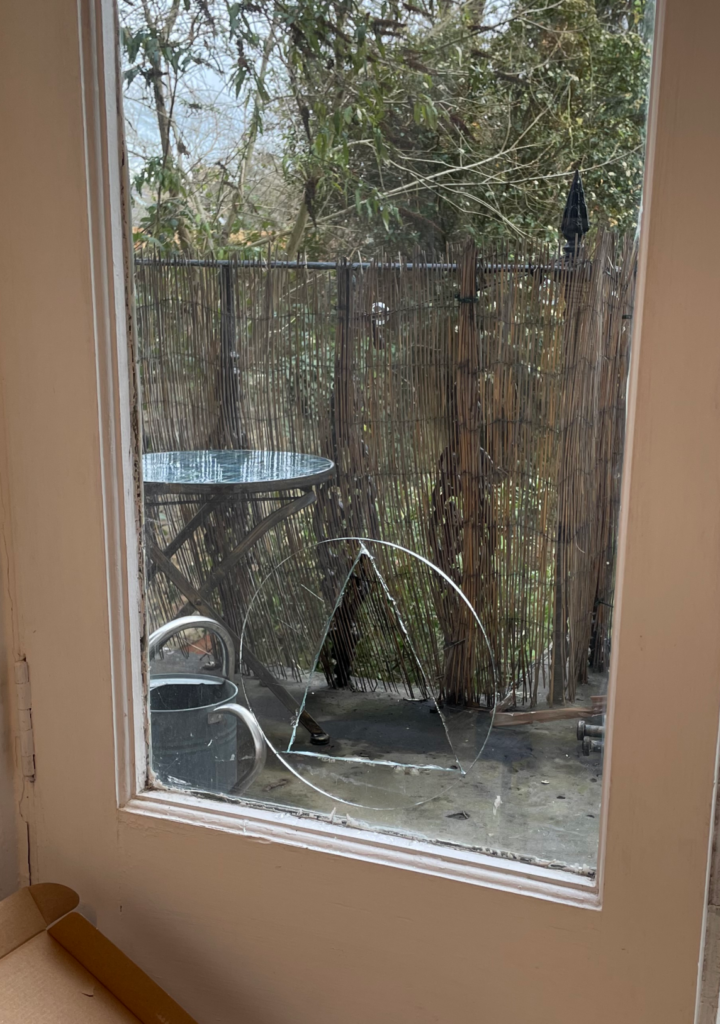
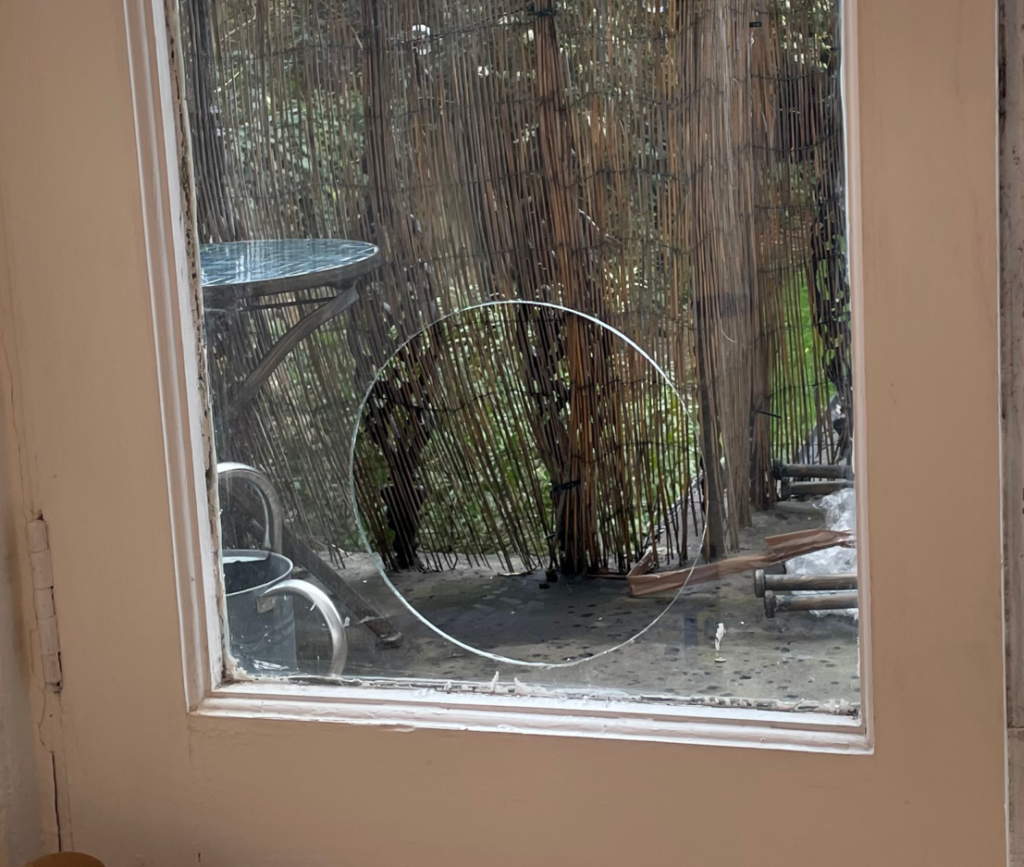
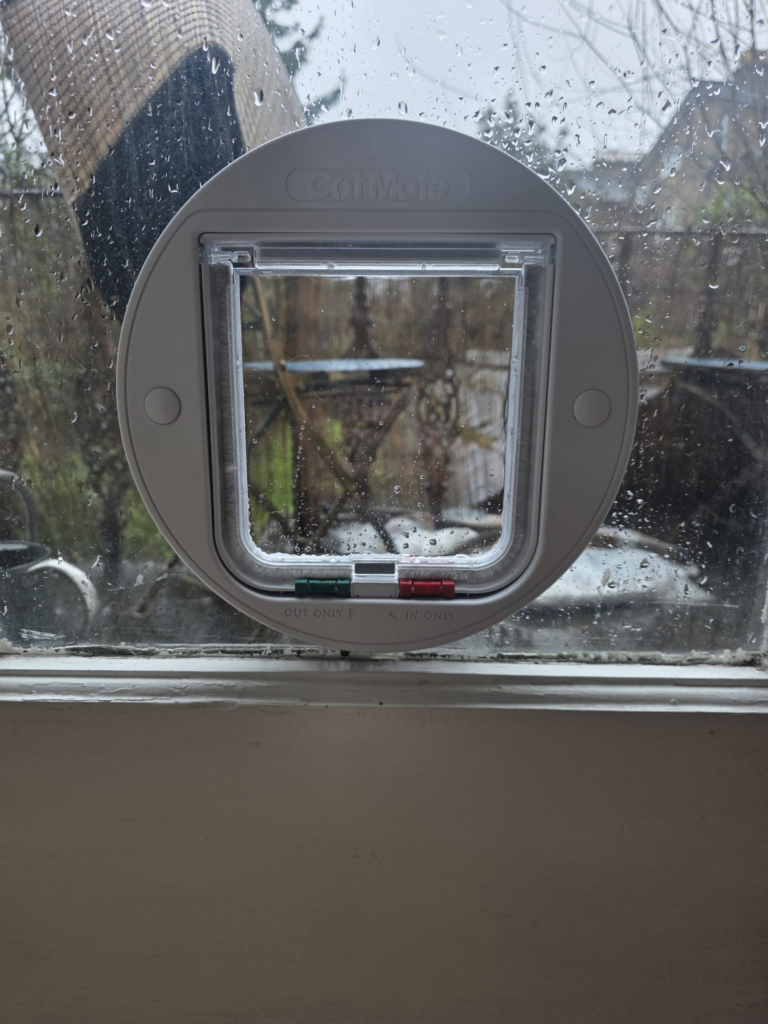
- I’ve been cutting holes in glass since 1990, both on-site and in a glass shop
- When you first contact me about fitting a cat flap in single glazed glass, I know the three main glass types, giving you a clear understanding of the costs involved:
- Regular Float Glass
This option includes 3mm, 4mm, or 6mm thickness choices, with options for clear, patterned, or Georgian wire cast glass. This is the most common and economical choice. - Laminated Glass
Laminated glass offers enhanced safety as it holds together when shattered. It can still be cut to fit your cat flap, but the process takes longer due to its composition. - Toughened Glass
Usually marked with a British kite mark, toughened glass is very strong and safe but can’t be cut after manufacture. It must be replaced. This is the most expensive option.
Providing these three options ensures you have peace of mind by knowing the highest prices upfront. Payable on completion of work.
On Arrival
- I thoroughly inspect the door or window frame ensuring the glass is secure and free from any cracks.
- Checking for a kite mark or if the glass as recently been changed

Important
- I have a 98% success rate when cutting holes in existing glass!
- All glass cutting is performed at the customer’s own risk.
- In the rare event that the glass cracks during the hole cutting process, the glass will need to be replaced with new tempered glass that has the hole pre-cut. At the price of changing the glass, not including.